How to spot a hazardous tree before It becomes a costly problem in camden county
Homeowners across southern New Jersey often start looking up the phrase signs a tree is dangerous camden county nj after a rough storm season or when a large limb suddenly drops near a driveway. Living here means dealing with humid summers, heavy rain, occasional ice, and the kind of wind that funnels through neighborhoods near the Delaware River. Those conditions put real stress on maples, oaks, sweetgums, and aging street trees that line many residential blocks. Understanding what a tree is telling you can protect your roof, your car, and anyone who walks under that canopy. The goal is not to panic every time a leaf turns brown. The goal is to notice patterns that point to real structural failure so you can act while the situation is still manageable.
A healthy tree flexes and recovers. A dangerous tree often shows quiet warnings long before a trunk splits or a crown collapses. One of the clearest early clues is a sudden lean that was not there the season before. Trees can grow with a gentle natural lean and still stay stable for decades. What matters is a new or increasing tilt, especially if the soil on the opposite side of the lean has heaved or cracked. In Camden County clay soils that stay wet after long rains, roots can lose grip. When the ground softens and a strong front rolls through, that lean can worsen overnight. Walk the base after heavy weather and look for fresh soil movement, exposed root plates, or a gap opening between the trunk and the surrounding dirt. Those details matter more than the angle alone.
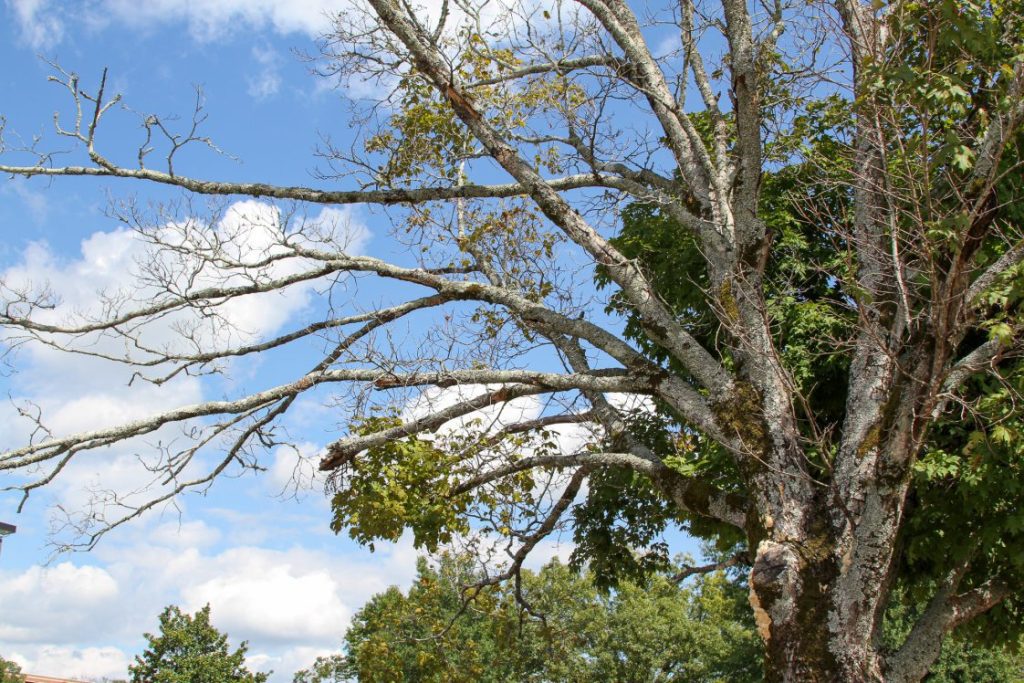
Dead wood is another honest signal. Large dead limbs high in the canopy do not always fall the same week they die, but they become heavier and more brittle with each freeze and thaw cycle. If you see bare branches that no longer leaf out while the rest of the tree greens normally, treat that as a priority inspection item. Deadwood can hang for months and then release without much wind at all. The same is true of hanging broken limbs caught in lower branches after a storm. People sometimes call those widow makers for a reason. They rest in a temporary cradle of living wood until a small shift in weight or moisture lets them drop. Never try to shake them free yourself if they sit above a walkway or play area.
Cracks and cavities
Vertical cracks that run deep into the trunk deserve careful attention. A shallow surface split may be old and sealed. A fresh crack that opens and closes with temperature changes, or one that shows light through the trunk when viewed from the side, suggests the tree is losing internal strength. Cavities at the base or higher on the stem tell a similar story. Hollow areas do not automatically mean the tree must come down, yet they reduce the amount of sound wood that carries the load. Soft, spongy wood around a cavity, fungal conks growing from the bark, or a musty smell near the base all point to decay that has been working longer than most people realize. In older neighborhoods of Camden County where trees were planted decades ago, internal rot is common in species that heal slowly after storm wounds or poor pruning cuts.
Fungal fruiting bodies deserve a second look because they are not just cosmetic. Shelf like mushrooms or brackets on the trunk or major roots often indicate heart rot or root decay. The fungus you see is the reproductive stage. The real damage is the network of decay already inside the wood. Some fungi appear after a tree is already compromised. Others actively weaken living tissue. Either way, their presence next to a large leaning trunk or under a heavy crown is a reason to bring in a qualified arborist rather than wait another season.
Root problems hide more easily than canopy problems, yet they decide whether the whole tree stays upright. Construction near the root zone, repeated soil compaction from parking, grade changes that bury the root flare, or trenching for utilities can kill large portions of the support system. A tree may look full and green for a year or two after root damage and then fail in a moderate wind because the anchorage is gone. Watch for sparse foliage on one side, early fall color on only part of the crown, or mushrooms circling the base. Those patterns often trace back to roots that can no longer feed or stabilize the tree. In denser parts of the county where lots are smaller and sidewalks sit close to trunks, root conflict with hardscape is frequent. Raised sidewalks and cracked driveways near a large tree are not only trip hazards. They can be evidence that roots are under stress or that the tree is shifting.
Bark and canopy changes
Bark that peels away in large plates, deep cankers, or areas where the bark is missing and the wood underneath looks dark or wet can signal disease or insect activity that weakens structure. Some issues stay cosmetic. Others move into the vascular system and reduce the tree’s ability to respond to storms. A thinning canopy that lets more sky through than it used to, especially when neighboring trees of the same species look full, is another quiet warning. Sudden dieback at the top of the crown, sometimes called stag heading when bare branches stick up like antlers, often means the tree is in serious decline. Decline does not always equal immediate danger, but a declining large tree next to a house carries higher risk than a vigorous one of the same size.
Storm history in this region makes timing important. Nor’easters, summer thunderstorms, and the occasional tropical remnant can load branches with rain or ice. After any significant weather event, a slow walk around the property is worth the time. Look for new splits at branch unions, especially where two stems of similar size meet in a tight V shape. Those codominant stems with included bark are classic failure points. The union looks solid until the weight of wet foliage or ice pries it apart. Wide U shaped unions are generally stronger. Tight V shapes with a seam of bark pushed between the stems are weaker. If you already see a crack starting at that union, the risk climbs quickly.
Insects and pests play a supporting role. Borers, scale, and certain caterpillars can stress a tree enough that secondary decay sets in. Heavy infestation alone rarely makes a tree fall the next day, yet combined with drought stress or old wounds it speeds decline. Sticky residue on leaves, fine sawdust at the base, or exit holes in the bark are worth noting and sharing with a professional who knows local pest pressure.
People sometimes underestimate how much a tree can hide. A full summer canopy can mask dead scaffold limbs. Ivy or dense vines can hide cracks and cavities. Mulch piled high against the trunk can conceal root flare problems and encourage rot right at the soil line. Pull vines away gently when it is safe to do so and keep mulch in a wide ring that does not touch the bark. Simple maintenance habits make visual checks easier and reduce avoidable stress on the tree.
When you notice several of these signs together, the question shifts from curiosity to responsibility. A single dead twig is normal. A large dead leader over a bedroom, a fresh lean toward the street, and fungal brackets at the base form a different picture. Document what you see with photos from multiple angles, including the base, the main unions, and the overall silhouette. Note recent weather, any construction nearby, and whether the tree sits under utility lines. That information helps an arborist give a clearer recommendation when they arrive.
Professional assessment matters because risk is about more than the tree itself. It includes the target underneath. A compromised tree in an open rear corner of a large lot presents a different level of concern than the same tree hanging over a neighbor’s roof or a busy sidewalk. Certified arborists evaluate both the structural condition and the occupancy of the space below. They can recommend pruning to reduce sail area, cabling or bracing in limited cases, or removal when the defects are too advanced. Trying to climb or cut large hazardous wood without training and proper equipment is one of the fastest ways a property problem becomes a personal injury.
Local conditions shape which species and sites fail most often. Clay soils that expand and shrink, high water tables in low lying pockets, road salt near busy corridors, and older planting stock from mid century development all influence what you are likely to see. Mature pin oaks and silver maples that were popular decades ago can develop included bark and brittle wood as they age. Callery pears, once widely planted for flowers, are notorious for weak branch structure and splitting under ice. Knowing the common patterns in your town does not replace an on site evaluation, but it helps you notice the right details sooner.
Regular observation is the most practical habit a homeowner can build. Walk the yard in late winter when the structure is bare and again in mid summer when foliage reveals thin spots. After any storm that brings down small branches elsewhere in the neighborhood, check your own trees before assuming everything held. Listen for creaking in high wind if a large tree stands close to the house. Creaking is not always catastrophic, yet new or louder sounds deserve daylight inspection once the weather calms.
Insurance and liability questions often follow a failure. Many policies expect reasonable maintenance. Ignoring obvious dead limbs or a clearly failing lean can complicate claims if damage occurs. Keeping records of inspections and any work performed shows that you treated the risk seriously. That paperwork is easier to assemble before an emergency than after a trunk is across the garage.
Cost is a fair concern. Removal of a large hazardous tree is rarely cheap, especially near structures or power lines. Yet the cost of emergency work after a failure, plus repairs to roofing, fencing, vehicles, or neighboring property, usually exceeds planned work. Early pruning or monitoring can sometimes extend safe years for a tree that still has enough sound wood. The decision depends on the specific defects, not on a general rule that every imperfect tree must go.
Children and pets add urgency because they use outdoor space without calculating risk. A swing hung on a limb that later shows a crack, a playset under a thinning canopy, or a dog run beside a leaning trunk all raise the stakes. Relocating activities is a temporary step while you arrange a professional look. Permanent solutions come from understanding the tree’s condition rather than from hope that nothing will happen this season.
Neighbors share the airspace. A tree on the property line or one that overhangs a shared fence creates shared interest in safety. Clear communication and, when needed, a neutral assessment help avoid conflict. Focus the conversation on observable signs and safety rather than on blame for who planted the tree decades ago.
Seasons change the visibility of problems. Fall color can hide early dieback. Winter reveals structure but can make decay harder to judge without experience. Spring growth shows which buds broke and which limbs stayed dormant. Use each season as a different lens instead of relying on a single yearly glance from the kitchen window.
If you are unsure whether a sign is serious, err on the side of a consultation. Many arborists will walk a property and explain what they see in plain language. Ask them to point out the specific defects, the likely failure modes, and the timeframe they associate with the risk. A good explanation leaves you able to watch for worsening signs yourself between visits.
Taking care of trees is part of taking care of a home in this county. The same canopy that cools the house in July and blocks wind in January can become a hazard when structure fails. Learning the language of lean, decay, deadwood, cracks, and root distress turns vague worry into concrete observation. Once you know what to look for, a short walk after a storm becomes a practical safety check rather than a source of low grade anxiety. Act on clear clusters of warning signs, keep records, and use qualified help for anything beyond light pruning from the ground. That approach protects people and property while still respecting the value mature trees bring to a neighborhood when they are sound.